
The U.S. Military Poisoned My Son
Books › Non-Fiction
Share
Mood & Emotion
Serious
Down to earth
Unusual
Optimistic
Character & Plot
Race/culture :
White
Age :
0-50
Sexuality :
Straight
Gender :
Male
Plot :
Success against the odds
Book Purchase Link
Book Description
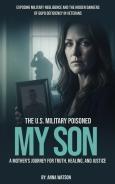
The U.S. Military Poisoned My Son: A Mother’s Journey for Truth, Healing, and Justice
The U.S. Military Poisoned My Son is a raw, personal, and emotionally wrenching memoir by Anna Watson that chronicles her family’s harrowing experience after her son became seriously ill under circumstances she attributes to toxic exposure associated with U.S. military environments. This book is structured as a mother’s quest for answers and accountability, blending personal narrative with advocacy and critique of military health and safety practices.
Watson’s storytelling is deeply intimate — she does not shy away from the heartbreak, fear, and frustration that come with watching a child suffer and then confronting what she views as institutional indifference. Her voice carries the dual weight of a loving parent and a determined activist, making the narrative compelling and, at times, difficult to read. The emotional honesty is among the book’s greatest strengths, drawing readers into the lived reality of her family’s ordeal.
However, the book isn’t just about personal loss; it also serves as a critique of systemic failures. Watson questions the adequacy of how environmental hazards are monitored and addressed by large institutions — particularly in military contexts — and highlights the challenges families face when trying to get transparent answers or support. While her arguments are heartfelt and passionate, some readers may find that the advocacy tone sometimes blends personal belief with broader systemic critique in ways that feel less anchored in independently verifiable evidence.
Stylistically, the book is straightforward and candid. Watson’s prose avoids unnecessary embellishment, which gives the narrative a sense of urgency and sincerity. This approach will particularly resonate with readers who respond strongly to memoirs centered on parental devotion and grassroots activism.
Overall, The U.S. Military Poisoned My Son is a powerful and provocative read that will appeal to those interested in personal memoirs of struggle and perseverance, environmental health advocacy, and the emotional journey of a parent seeking justice. Even if some aspects of the broader claims invite debate, Watson’s story is an important reminder of the very human impact behind discussions of institutional responsibility. Now available on Amazon, Google Play Books, Barnes and Noble