About the AuthorGeir Undli is the creator of Human Resonance, a conceptual framework and philosophy that explores how people connect, clash, and find harmony through different layers of communication and presence. His work is not rooted in theory alone, but in experience shaped under extreme human conditions.He spent 15 years in prison, including extended periods in solitary confinement, and has also been admitted to psychiatric institutions. In environments where freedom, identity, and human contact are often reduced to their most basic forms, Geir began to observe something deeper than behavior: patterns of energy, emotional atmosphere, unspoken social dynamics...
More
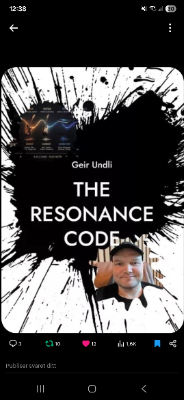
About the AuthorGeir Undli is the creator of Human Resonance, a conceptual framework and philosophy that explores how people connect, clash, and find harmony through different layers of communication and presence. His work is not rooted in theory alone, but in experience shaped under extreme human conditions.
He spent 15 years in prison, including extended periods in solitary confinement, and has also been admitted to psychiatric institutions. In environments where freedom, identity, and human contact are often reduced to their most basic forms, Geir began to observe something deeper than behavior: patterns of energy, emotional atmosphere, unspoken social dynamics, and the invisible forces that shape human interaction.
Rather than being broken by isolation, he turned it into a study.
From those years, Human Resonance emerged a model that views human interaction as a spectrum of frequencies, much like the instruments in a band. In this philosophy, physical presence, emotional tone, mental exchange, social layers, and a deeper soulful expression function as different bands of connection, each influencing the harmony or dissonance between people.
At the core of Human Resonance lies one central idea: resonance is real, and human connection is not random it follows structure, rhythm, and frequency.
Today, Geir writes to give language to what many people feel but cannot explain: why some conversations heal, why others collapse, and why certain people naturally find each other, while others never will. His work speaks to those who have experienced isolation, transformation, and inner rebuilding and to anyone seeking a deeper understanding of what it truly means to be in contact.
Less